
October 9, 2026
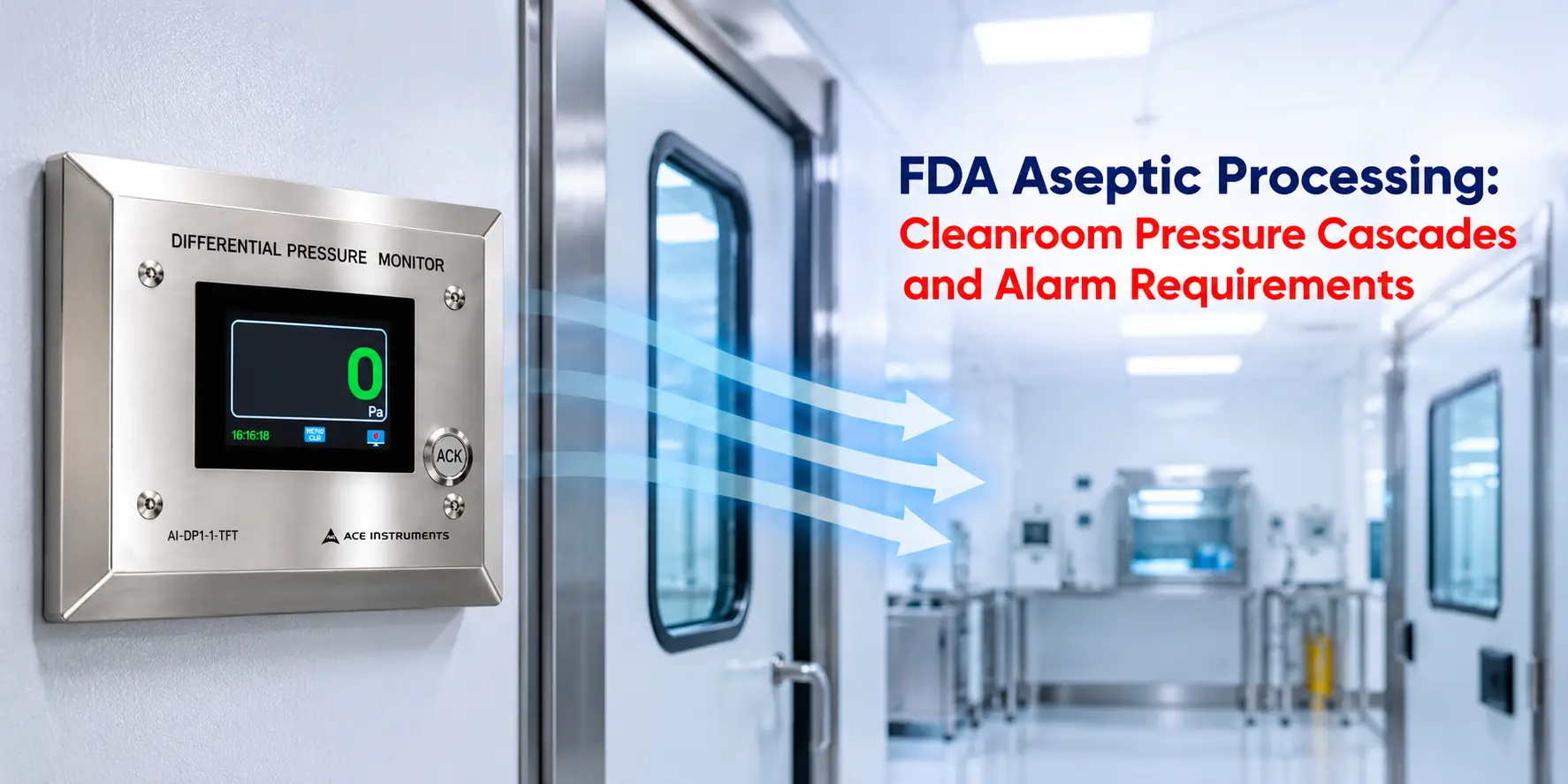
The FDA aseptic processing pressure cascade is the set of pressure differentials that keep air flowing from the cleanest room outward to less clean rooms. The 2004 FDA guidance on sterile drug products produced by aseptic processing recommends at least 10 to 15 Pa between adjacent rooms of differing classification with doors closed, and at least 12.5 Pa between the aseptic processing room and any unclassified neighbour. The guidance also says what a monitoring system should do when that cascade starts to fail, which is where alarms come in.
What the FDA guidance says about pressure and alarms
FDA guidance documents are recommendations. The document itself says its “should” language means suggested, not required, and that an alternative approach is acceptable if it satisfies the regulations. The binding hook is 21 CFR 211.42(c)(10)(iv), which lists a system for monitoring environmental conditions as part of aseptic processing, and 21 CFR 211.46(b), which calls for adequate control over air pressure where appropriate.

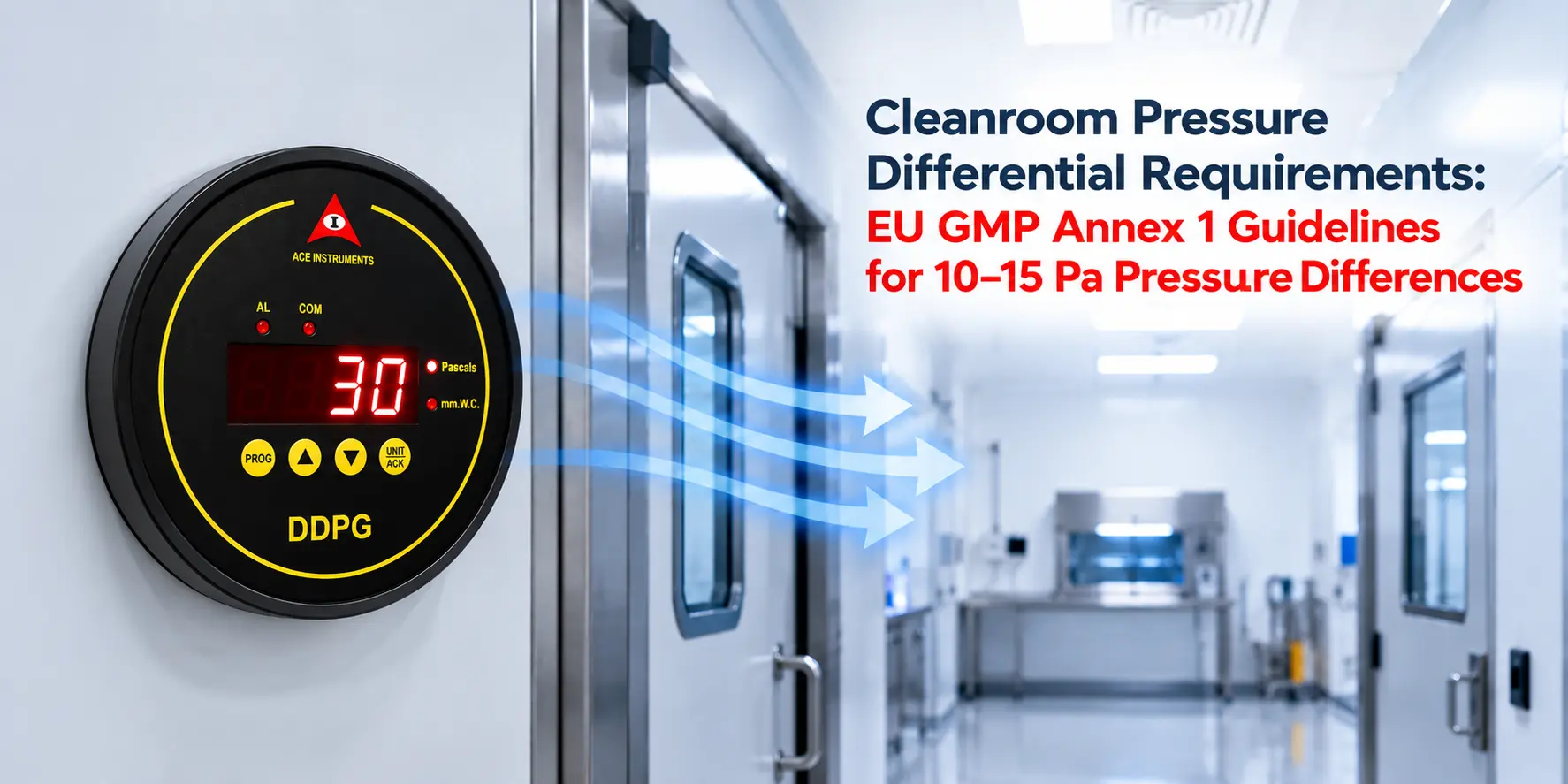
EU GMP Annex 1 reaches a similar number by a different route, a 10 Pa guidance value between grades, which is set out in Annex 1 pressure differential requirements.
How to read the alarm expectation
The guidance does not give an alarm setpoint or delay. It states the outcome it wants: a low pressure problem is detected promptly enough to prevent unclassified air entering a classified room. Setting the limit is therefore a documented engineering decision, tied to the qualified operating range of each room and not copied from a generic number.
Two practical consequences follow. First, an alarm limit set at the 10 Pa minimum gives no warning before the cascade is already at its floor, so many sites use an alert level above it. Second, the door behaviour FDA describes (time ajar strictly controlled) is the natural basis for any alarm delay, which is worked through in alarm delays and what inspectors look for. What happens after the alarm, the investigation and the recovery, is covered in excursion management.
Records, calibration and shutdown recovery
Alarms only help if the data behind them can be trusted. 21 CFR 211.160(b)(4) requires instruments, gauges and recording devices to be calibrated under a written program, and FDA’s guidance says deviation and change control should address shutdown of air handling systems, with written procedures for returning the facility to operating conditions. Pressure records around an AHU stop and restart are some of the most useful evidence a site can hold, and how long a room should take to come back is covered in Annex 1’s clean-up period.
Those records are also what a reviewer reads first. Environmental monitoring data for inspections shows how pressure trends and alarm logs are presented.
Ace Instruments cleanroom monitors assist users in complying by supplying continuous measurement, alarm outputs, digitally stamped electronic records and an audit trail. For the pressure point, the differential pressure indicators (AI-DP1-1, AI-DDPG) record the differential and provide alarm outputs, and the humidity and temperature monitor logs the other two parameters on the same time base.
Ace Instruments, founded in 1991 in Hyderabad, holds ISO 9001:2015 certification and applies CE marking to all products.
Frequently asked questions
1. What pressure differential does FDA recommend between cleanrooms?
FDA’s aseptic processing guidance recommends at least 10 to 15 Pa between adjacent rooms of differing classification, measured with doors closed.
2. What does FDA say about an unclassified room next to the aseptic processing room?
The guidance says a substantial overpressure, for example at least 12.5 Pa, should be maintained from the aseptic processing room at all times. If it drops below the minimum, the room’s environmental quality should be restored and confirmed.
3. Does FDA expect alarms on cleanroom pressure?
The guidance recommends continuous monitoring throughout each shift, frequent recording, specifications that allow prompt alarm detection of an emerging low pressure problem, documented alarms and investigated deviations.
4. Is the FDA aseptic processing guidance legally binding?
No. It describes the agency’s current thinking and uses “should” to mean recommended. Alternative approaches are acceptable if they satisfy the underlying CGMP regulations in 21 CFR parts 210 and 211.
Why trust Cleanroom Monitors
Cleanroom monitoring instrumentation from Ace Instruments is CE marked and manufactured under an ISO 9001:2015 quality system in Hyderabad, with more than 35 years of field experience.
Stay updated
Know the latest trends in clean room solutions from the Ace Instruments team


