

Hospital GPS Synchronized Clocks (AI-CL)
One hospital, one time. GPS synchronized clocks that keep every department reading the same time, with no manual setting.
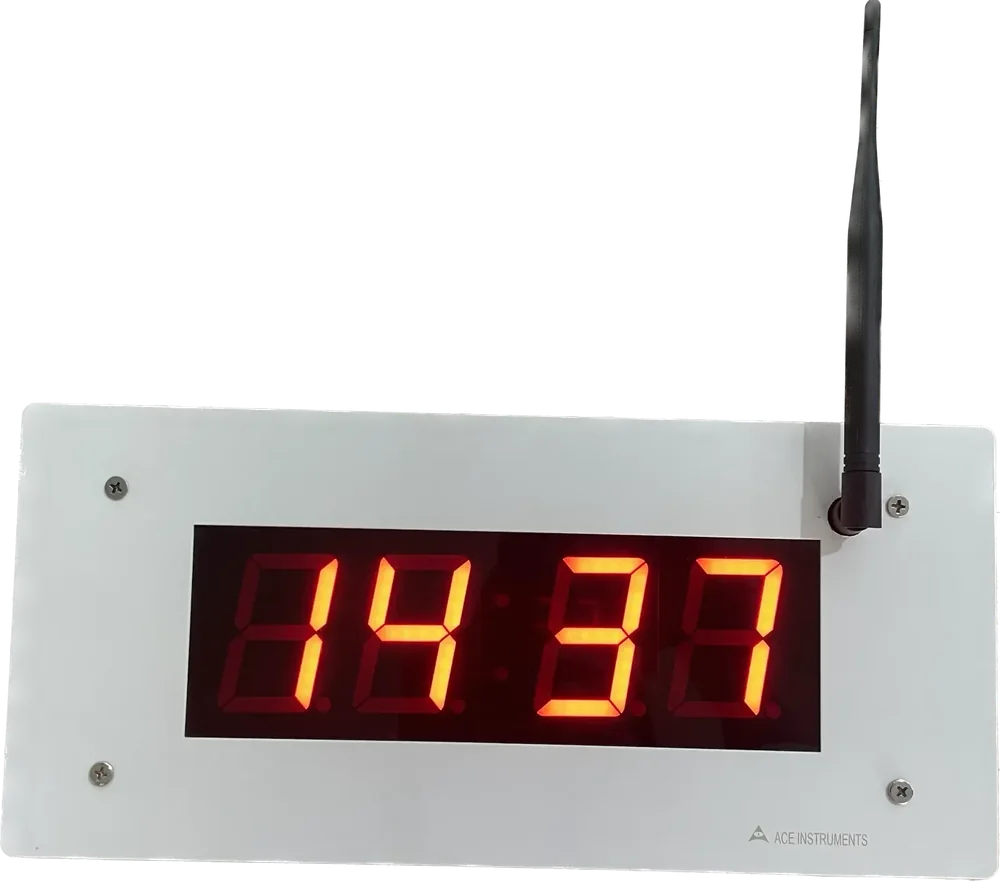
One time reference for every department
The AI-CL series of synchronized clocks is designed for seamless mounting in hospital environments. Traditional clocks drift independently, which leads to discrepancies in patient records, medication logs, and shift changes. The Ace Instruments AI-CL series uses GPS synchronization to give every department the same time reference across the entire facility, without the need for manual adjustment.
Receive, adjust, display
Each clock receives time information from global positioning satellites and automatically adjusts its displayed time to the synchronized reference. Staff never reset individual clocks by hand. Once the clocks are installed and synchronized, they are designed to hold the common time reference automatically, so an operating theatre, a pharmacy, a nurses' station, and a waiting area all show the same time.
Small gaps, real confusion
Clocks that run independently gradually develop time differences. In a hospital, even small discrepancies can cause confusion in patient records, medication logs, procedure timings, handovers, and staff coordination. A synchronized clock system gives the whole facility one consistent time reference, which helps reduce the gap between what a wall clock shows and what a record says. This is most useful where several departments depend on the same time to document or coordinate their work.
Built for hospital environments
Seamless Hospital Integration
A slim, antimicrobial-friendly housing designed for flush or surface mounting in sterile environments
GPS Synchronization
Automatically takes its time from global positioning satellites, so every clock follows the same reference
Multiple Synchronization Options
Wireless RF, Wired RS485 or PoE synchronization
High Visibility Display
Large, flicker free LED digits designed to be read quickly in high pressure areas and from the far end of long hospital corridors
Flush or Surface Mounting
Choose the installation method that suits the hospital's architectural requirements
Suited to Multi Department Hospitals
One time reference across every location, rather than each clock being adjusted individually
Where the AI-CL is used
Operating Theatres
Gives surgical teams a clearly visible common time reference, which supports consistent timestamping of procedure milestones
Pharmacies
Supports consistent timing information for time sensitive medication handling and dispensing logs
Nurses' Stations
Keeps shift rotations, rounds, and handovers on a single time reference across wards and departments
Waiting Areas
Gives patients and visitors a clear, reliable time display that matches the rest of the facility
Corridors
Large digits that staff can read quickly while moving between departments
Treatment Areas
Provides a consistent time reference where clinical activity needs to be timed and recorded
Large Hospitals with Multiple Departments
Keeps clocks spread across many locations in step without anyone adjusting them individually
GPS synchronization compared with manually set clocks
| Manually set clocks | AI-CL GPS synchronized clocks | |
|---|---|---|
| Setting the time | Staff reset each clock | Automatic, from the GPS time reference |
| Drift | Clocks gradually diverge | Held to a common reference |
| Human error | Possible at every reset | Removed from time setting |
| Staff workload | Periodic checks and resets | No routine manual adjustment |
| Consistency across departments | Depends on the last reset | One time reference across the facility |
Before you specify the clocks
Work through these points with your project team.
Number and location of clocks
List every department and location where synchronized time is needed.
Viewing distance and display size
Choose digit size by how far away people will read the clock, with larger displays for long corridors and operating theatres.
Mounting method
Flush mounting keeps the wall surface smooth, and surface mounting suits retrofits where the wall cannot be opened.
Installation environment
Consider the room's use, whether it is a sterile area, and how it is cleaned.
Architectural, electrical, and infection control requirements
The installation should follow the hospital's own requirements.
Our team can review the hospital layout, the number of clock locations, display visibility needs, and mounting preferences, and recommend a suitable configuration.
Reviewed against your procedures
The AI-CL series uses a slim, antimicrobial-friendly housing designed for hospital environments and for mounting in sterile areas. The exact installation and cleaning requirements should be reviewed against your hospital's infection control procedures before you finalize the mounting method and the cleaning routine.
Supports good documentation practice
A synchronized clock does not by itself satisfy any regulation. It supports good documentation practice by making sure that the time people read and write down is the same time everywhere in the facility. Many healthcare and pharmaceutical quality systems expect timestamps in records to be accurate and consistent, and synchronized clocks help meet that expectation for the clocks that staff read.
Ace Instruments manufactures the AI-CL series under an ISO 9001:2015 certified quality management system.
Technical specifications
Please contact us for display size options, digit height, supply requirements, and system configuration for your project.
Frequently asked questions
1. What are Hospital GPS Synchronized Clocks?
Hospital GPS Synchronized Clocks are digital clocks designed to maintain the same accurate time across different areas of a healthcare facility. The AI-CL series uses GPS synchronization to provide a common time reference for departments such as operating theatres, pharmacies, nurses' stations, and waiting areas.
2. Why is accurate time synchronization important in hospitals?
Different clocks that operate independently can gradually develop time differences. In a hospital, even small timing discrepancies can create confusion in patient records, medication logs, procedure timings, handovers, and staff coordination. A synchronized clock system provides a consistent time reference throughout the facility.
3. How does GPS synchronization work?
The clock receives time information from global positioning satellites and automatically adjusts its displayed time to the synchronized reference. This eliminates the need for staff to manually adjust individual clocks and helps maintain a common time standard across the hospital.
4. Do all clocks in the hospital display the same time?
Yes. When the clocks are properly installed and synchronized to the GPS time reference, they are designed to maintain a unified time across the facility. This is particularly useful where multiple departments need to coordinate activities using the same time reference.
5. What are the advantages of GPS synchronization compared with manually setting hospital clocks?
Manual adjustment requires staff to periodically check and reset individual clocks. GPS synchronization automates the time setting process and reduces the possibility of clocks developing different time readings due to clock drift or human error.
6. Where can these synchronized clocks be installed in a hospital?
Typical locations include operating theatres, pharmacies, nurses' stations, corridors, waiting areas, treatment areas, and other departments where a reliable and consistent time display is required.
7. Are the clocks suitable for operating theatres?
Yes. The clocks are designed for healthcare environments and can provide a clearly visible common time reference in operating theatres. This can help staff coordinate procedure timings and maintain consistent time references during surgical activities.
8. Can the clocks be used in hospital pharmacies?
Yes. Accurate time display can be useful in pharmacies for coordinating time sensitive medication handling and maintaining consistent timing information across the facility.
9. Are the displays easy to read from a distance?
The AI-CL series uses large, high visibility LED digits designed for easy viewing in hospital environments, including corridors and other areas where personnel need to read the time quickly. The display is also specified as flicker free.
10. Can these clocks be installed flush with the wall?
Yes. The AI-CL series is designed to support flush or surface mounting, allowing the installation method to be selected according to the hospital's architectural and installation requirements.
11. Are the clocks suitable for sterile healthcare environments?
The product is described as having a slim, antimicrobial-friendly housing designed for hospital environments and for mounting in sterile areas. The exact installation and cleaning requirements should be considered according to the hospital's infection control procedures.
12. Do the clocks require manual time adjustment after installation?
The AI-CL series is designed to synchronize automatically using GPS, reducing the need for routine manual time adjustment. Once installed and synchronized, the clocks are intended to maintain the common time reference automatically.
13. Can synchronized clocks help with patient handovers and shift coordination?
Yes. Having a consistent time displayed across departments can help nursing and clinical teams coordinate shift changes, patient handovers, rounds, and other activities without discrepancies between different clock locations.
14. Can these clocks be used in waiting areas?
Yes. Hospital waiting areas are one of the intended applications. A consistent and clearly visible time display can provide patients and visitors with reliable time information while also maintaining synchronization with the rest of the facility.
15. What problems can synchronized clocks help prevent?
They can help reduce discrepancies caused by independently operating clocks. This is particularly useful where different departments rely on time references for procedure documentation, medication related activities, staff coordination, patient handovers, and operational records.
16. Are these clocks suitable for large hospitals with multiple departments?
Yes. GPS synchronization is particularly useful where multiple clocks are distributed across different departments and locations. A common time reference can help maintain consistency throughout the facility rather than requiring each clock to be individually adjusted.
17. What should I consider when selecting Hospital GPS Synchronized Clocks?
Consider the number and locations of clocks required, viewing distance, display size, mounting method, installation environment, and the specific departments where synchronized time is needed. For healthcare projects, the installation should also take into account the hospital's architectural, electrical, and infection control requirements.
18. How can I choose the right synchronized clock solution for my hospital?
The appropriate configuration depends on the hospital layout, number of clock locations, display visibility requirements, and mounting preferences. Cleanroom Monitors can help evaluate the application and recommend a suitable synchronized clock configuration for operating theatres, pharmacies, nurses' stations, corridors, waiting areas, and other healthcare environments.
Need help choosing?
Tell us your hospital layout, number of clock locations, viewing distance, and mounting preference, and our application engineers will recommend the right AI-CL configuration.
Exceptional Instruments That Surpass Your Technical Expectations
Powerful, customized solutions to suit your unique cleanroom monitoring needs
Discover moreGain insight into your IAQ solution and know technical specifications